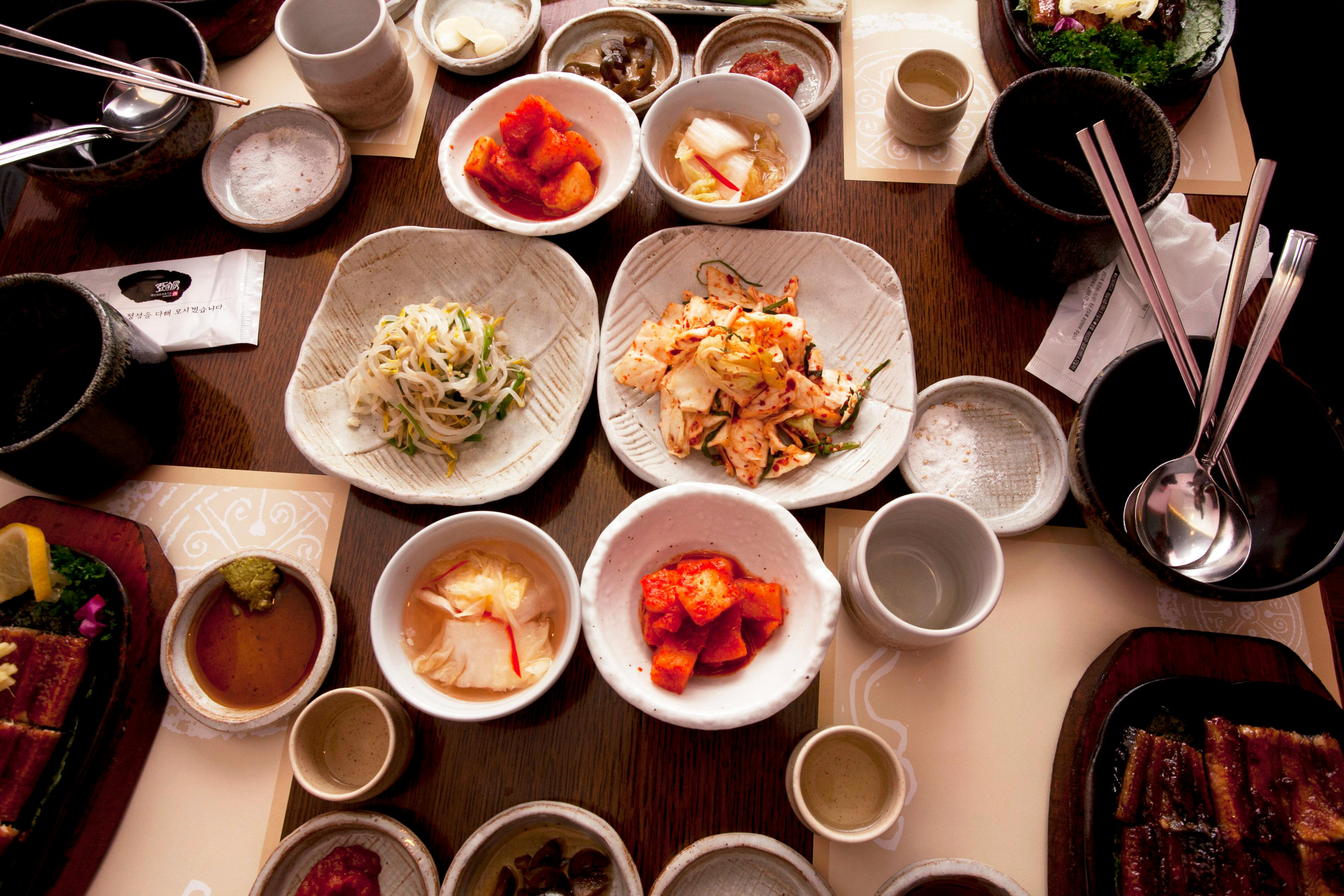
If you have ever ordered food at a traditional Korean restaurant, you have likely experienced a moment of delightful shock. Just as you finish placing your order, plates begin to arrive—not just your main dish, but a dizzying array of tiny, colorful ceramic bowls covering every square inch of the table. To a newcomer, it feels like a feast fit for royalty.
The fundamental truth to understand is this: Korean food is not just one main dish. A traditional Korean meal is structured around a complete ecosystem of flavors: rice + soup or stew + kimchi + several banchan (side dishes).
1. The Anatomy of a Korean Table Setting
In Western culinary traditions, a meal often revolves around a single, dominant main course accompanied by one or two minor sides. Korean dining, however, is holistic. Every element on the table plays a precise role:
- Rice (Bap): The sacred anchor and neutral canvas of the meal.
- Soup or Stew (Guk or Jjigae): Provides hydration, warmth, and a savory liquid contrast to the grains.
- Kimchi: The essential probiotic powerhouse that resets the palate between bites.
- Banchan: A diverse collection of small side dishes designed to introduce varied textures, temperatures, and nutritional balance.
2. The Spectrum of Banchan
Banchan is not a random collection of leftovers; it is a meticulously crafted category of culinary art. Depending on the cooking technique and ingredient, banchan ranges across several traditional styles:
- Namul: Seasoned wild greens and blanched vegetables tossed in sesame oil, garlic, and salt, celebrating earthy freshness.
- Jorim: Proteins or vegetables simmered down in a rich, sweet soy-sauce reduction until tender and deeply flavorful.
- Muchim: Freshly tossed and seasoned vegetables mixed with red chili powder, vinegar, and sesame seeds for a bright, tangy crunch.
- Jeon: Pan-fried savory pancakes made from sliced vegetables, seafood, or meats coated in light batter and egg.
- Jeotgal: Small portions of intensely salty, fermented seafood that provide concentrated bursts of umami.
"Are there a required number of banchan dishes? While ancient royal tables featured up to twelve distinct plates (surasang), everyday modern meals scale this down naturally based on household size, season, and occasion—ranging anywhere from three to over a dozen."
3. The Philosophy of Sharing and Communal Dining
One of the most striking aspects of Korean banchan culture is that these dishes are meant to be shared. Unlike Western dining where individual plates are strictly portioned out to each guest, a Korean table is a shared landscape. Everyone dips their chopsticks into the same central bowls of banchan, creating an atmosphere of intimacy, connection, and collective harmony.
This shared approach ensures that every single bite of plain rice can be paired with something entirely different—a crunchy seasoned sprout one second, a spicy strip of kimchi the next, and a savory braised tofu after that. It guarantees that a meal is never monotonous.
💡 Key Insight: Dispelling the Waste Misconception
First-time international travelers sometimes worry that multiple small side dishes lead to excessive food waste. However, traditional banchan portions are deliberately small—precisely sized so that they can be fully consumed. Furthermore, historic banchan culture was rooted in preservation and resourcefulness, using seasonal harvests and scraps to create long-lasting, nutrient-dense accompaniments.
4. Modern Evolution: How Banchan is Changing
As modern life speeds up, the way Koreans consume banchan is also transforming. Preparing dozens of separate side dishes from scratch every single day has become less practical for busy urban households. This shift has given rise to specialized neighborhood banchan shops (banchan-gage), where home cooks can pick and choose freshly made daily side dishes.
Final Thought
When you sit down to a Korean meal, you are experiencing much more than lunch or dinner—you are stepping into a centuries-old philosophy of balance, community, and care. Banchan transforms a simple bowl of grains into an ever-changing culinary adventure, proving that the true magic of Korean food lies in the spaces between the dishes.