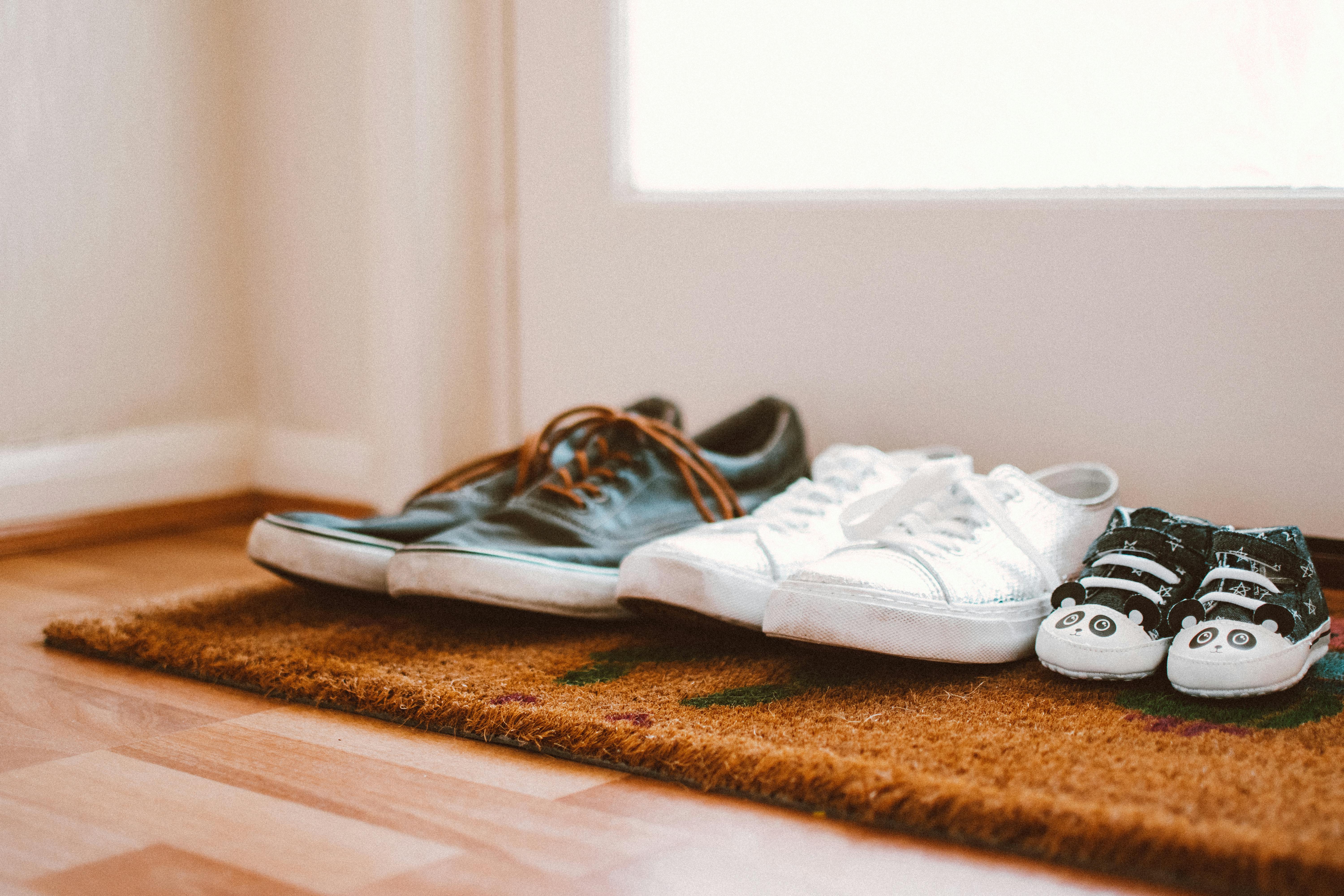
It's usually one of the first things a visitor to Korea learns, often the hard way — you walk into someone's home, or a traditional restaurant, or even certain waiting rooms and clinics, and there's a small raised step, a shoe rack, and an expectant pause.
Shoes come off here. Always.
For a lot of foreign visitors, this barely registers as strange — plenty of cultures do this. What's more surprising is how far it extends in Korea, and how automatic it is. The usual explanation is hygiene — you don't want to track outside dirt into a clean home. True, but incomplete. Something much deeper is going on underneath.
01. THE FLOOR IS FURNITURE
The real answer starts with how Koreans have traditionally used the floor itself. In a lot of Western homes, the floor is something you walk across to get to the furniture — the chairs, the bed, the couch — where the actual living happens. In a traditional Korean home, the floor is the furniture.
People sat on it to eat, at low tables. They slept on it, on mats. Guests were received on it.
"When the floor is where you eat, sleep, and gather, it stops being a walkway and starts being something closer to a shared surface for living."
🖋️ Author's Note: The Magic of Ondol
Looking deeply into Korean culture, it becomes apparent that much of it stems from a fierce struggle: how to survive the harsh winters.
Korea experiences four distinct seasons, but from late October to February, the country is gripped by a biting, prolonged winter. To endure this extreme cold, Koreans invented an ingenious heating system known as Ondol. In fact, laying down this Ondol system is the most crucial foundational work when building a traditional home.
The mechanics of Ondol are highly scientific. When a fire is lit in the kitchen hearth, the heat travels through a maze-like network of stone flues beneath the floor, circulating the entire room before exiting through a chimney on the opposite side. Unlike Western fireplaces, where hot air rises and dissipates—warming only the immediate vicinity—Ondol traps the heat within the floor itself, making it an incredibly smart and energy-efficient system that minimizes heat loss.
Having gone to such great lengths to meticulously heat the floor for the long winter, how could anyone step on it wearing shoes covered in outside dirt? The Korean custom of taking off shoes indoors is more than just a rule for cleanliness; it is the natural, inevitable result of a wise way of life, born from adapting to nature and protecting the vital warmth of the home.
02. PROTECTING THE SANCTUARY
Beyond comfort, there's a real boundary being maintained here — between the space that belongs to the outside world and the space that belongs to the home. Korean homes have historically operated with a fairly clear sense of what's allowed to cross that threshold.
 The warm, wooden floor of a traditional Korean house, functioning as a shared living space.
| Traditional Dining |
You will find this rule in certain restaurants, especially ones with traditional low-seating rooms. |
| Public Clinics |
Some clinics and local offices still maintain a shoes-off policy for hygiene and comfort. |
For a visitor, taking off your shoes at the door can feel like a minor inconvenience. But it's worth seeing it for what it actually represents: a quiet, physical acknowledgment that you're stepping into a different kind of space, one with different expectations, the moment your feet hit the raised, warm floor.