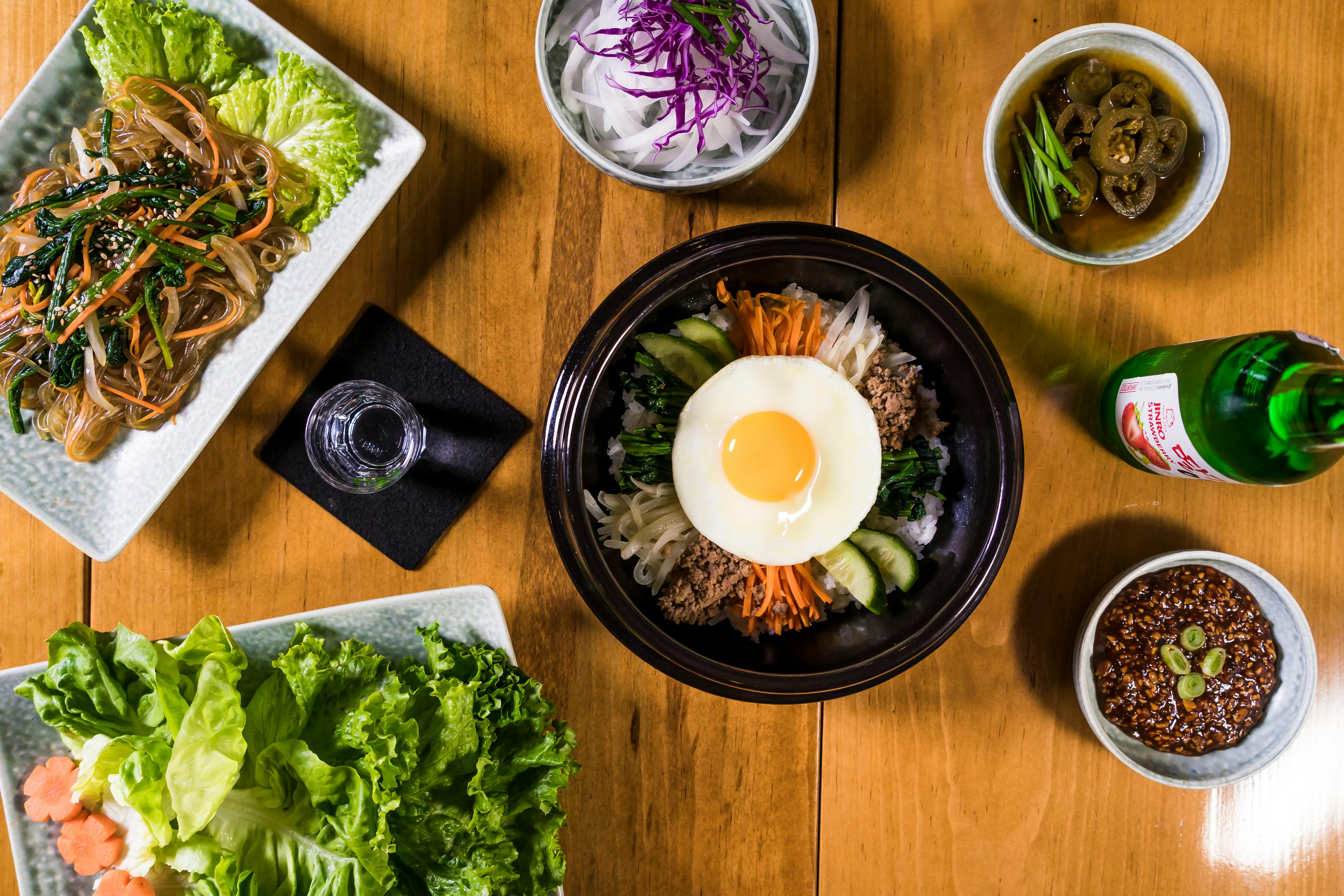
If you walk down the streets of New York, London, or Los Angeles today, you are almost guaranteed to smell the sweet-savory smoke of Korean barbecue, spot a line outside a trendy tteokbokki bar, or see someone enjoying a crispy Korean fried chicken sandwich. Korean food is no longer a niche ethnic option; it is a global powerhouse.
However, this massive international success did not happen overnight. To truly understand K-Food today, we have to look at the big picture: the journey from traditional home cooking to industrial shifts, mass popular culture, Hallyu (the Korean Wave), and finally, global K-Food.
1. From Ancient Hearth to Industrial Shifts
For centuries, Korean cuisine was strictly tied to the land and the seasons. Rural families relied on communal farming, local harvests, and long-term fermentation. Meals were slow, deliberate, and deeply localized. Following the rapid industrialization of the late 20th century, urban life demanded speed, which gave birth to iconic staples like instant ramyeon, turning convenient meals into a national obsession.
2. The Rise of Mass and Street Culture
As cities expanded, a vibrant street food and casual dining culture flourished. Iconic dishes like Tteokbokki (chewy rice cakes in spicy chili sauce) and Korean Fried Chicken (double-fried perfection) took center stage, eventually traveling abroad to redefine international pub and comfort food menus.
"Korean cuisine's greatest strength is its ability to adapt. It respects its ancient heritage while enthusiastically embracing modern flavors and rapid innovation."
3. The Cultural Catalyst: K-Dramas and Global Curiosity
The explosive growth of K-Dramas and K-Pop acted as a global bridge. Fans worldwide began craving the foods they saw their favorite stars enjoying—whether it was soju, Korean BBQ, or spicy noodles. Pop culture effectively turned curiosity into a mainstream global craving.
4. The Evolution of K-Food Fusion
Today, K-Food is pushing boundaries through bold experimentation. Chefs are blending traditional ingredients—like doenjang, ssamjang, or perilla leaves—with global staples like pasta, creating exciting new fusion dishes that appeal to diverse palates. This adaptability ensures that Korean flavors remain relevant and exciting in the global culinary scene.
💡 Key Insight: The Future of K-Food
K-Food is moving beyond traditional restaurants into the global grocery aisle and innovative fusion kitchens. As chefs worldwide blend Korean fermentation techniques with local ingredients, K-Food is cementing itself as a permanent pillar of world gastronomy.
Final Thought
Korean food’s journey from a quiet, localized kitchen tradition to a global culinary movement proves that great flavor knows no borders. When we enjoy modern K-Food, we are tasting centuries of wisdom, decades of rapid innovation, and a vibrant culture that loves to share its table with the world.