When King Sejong the Great commissioned the creation of Hangeul in 1443, he wasn't just solving a technical problem; he was initiating a radical disruption of the entrenched power structures of the Joseon Dynasty. For centuries, literacy—the ultimate gatekeeper of political, social, and economic power—was locked behind the incredibly complex wall of Chinese characters, accessible only to the scholarly elite. By introducing a phonetic alphabet that mimicked the biological mechanics of the human mouth, tongue, and throat during speech, Sejong essentially "hacked" the human capacity for learning.
This was perhaps the greatest act of social engineering in Korean history. By handing the power of self-expression to the common people, he ignited a slow-burning fire of egalitarianism. We often overlook the fact that this created a uniquely high-functioning population capable of rapid information absorption. This foundation of high literacy is the invisible thread connecting 15th-century scholars to 21st-century software developers.
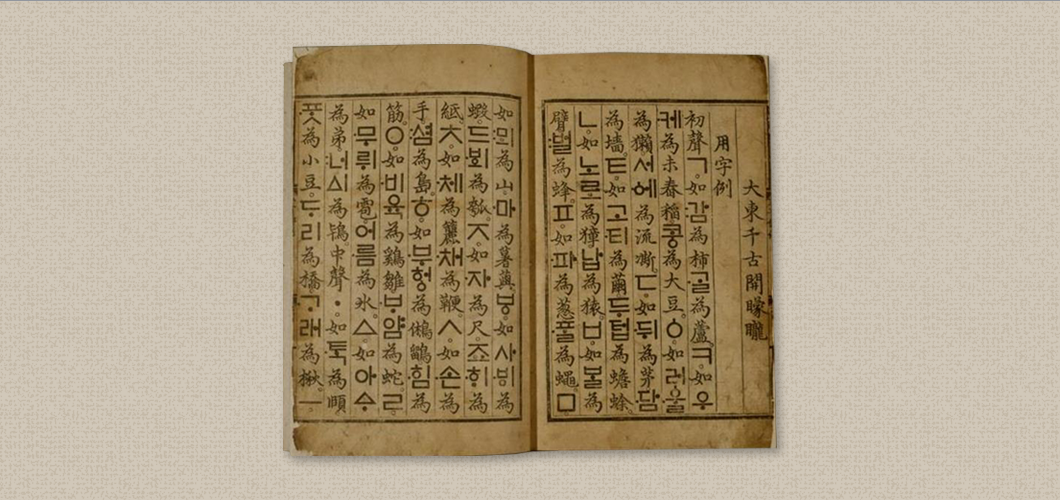 Official visualization of Hangeul phonetic and philosophical creation principles. Source: National Institute of Korean Language.
The scientific brilliance of Hangeul—its modular, logical structure—is perfectly suited for our digital age. It is efficient, precise, and uniquely capable of adaptation. When we celebrate Korea’s rapid rise from war-torn poverty to a digital superpower, we must trace the root of that collective cognitive agility back to this singular, revolutionary moment of linguistic empowerment. Hangeul didn't just give us a way to write; it gave us a way to think, argue, and innovate together.
Official visualization of Hangeul phonetic and philosophical creation principles. Source: National Institute of Korean Language.
The scientific brilliance of Hangeul—its modular, logical structure—is perfectly suited for our digital age. It is efficient, precise, and uniquely capable of adaptation. When we celebrate Korea’s rapid rise from war-torn poverty to a digital superpower, we must trace the root of that collective cognitive agility back to this singular, revolutionary moment of linguistic empowerment. Hangeul didn't just give us a way to write; it gave us a way to think, argue, and innovate together.
Sources:
National Institute of Korean Language - History of Hangeul Archives
